
Blog
Opportunities
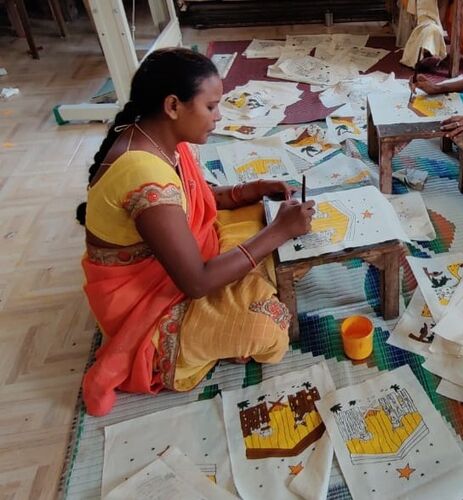
That there are no longer people affected by leprosy working in the unit is a matter of great joy for it means the earlier workers have grown old and retired (they live nearby and have their own registered society) and there are no new leprosy patients needing sheltered work of this kind. This is a pattern we see in other leprosy communities too. Good and effective leprosy treatment became available in 1984 and over time, the presence of leprosy has fallen to “controlled” levels of less than 1 per 10,000 population and even those people can get effective treatment leaving no disabilities and so with no threat to earning a living.
MESH still buys products from leprosy communities in Bihar, Andhra Pradesh and Utter Pradesh, Beautiful handwoven cotton table linen


and bags,

Now that leprosy is “controlled” and polio vaccination campaigns having brought the incidence of polio to zero in India, the challenge for organizations like MESH is how to work with men and women with intellectual and development disabilities, like autism and Down Syndrome as well as those with multiple disabilities. For that, we are delighted to work alongside organizations like Kiran near Varanasi and Nav Prabhuthi Trust, Bangalore and SCD in Delhi.
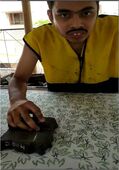
Over many years I have seen women like Adamma who had nothing but stumps for fingers and thumbs choosing to find a way to wind bobbins in a weaving unit because she wanted to work. I have seen a young man with autism who wasn’t at all interested in tidy perfectly placed block print patterns work as a team with another man with autism to print lovely fabrics.
And we have seen Rohit, with very shaky cerebral palsy who is almost non-verbal, serve customers in our shop for more than twenty years….I know amazing things happen when people with disabilities are given opportunities. Help us to keep those opportunities coming.
And finally.....a special request
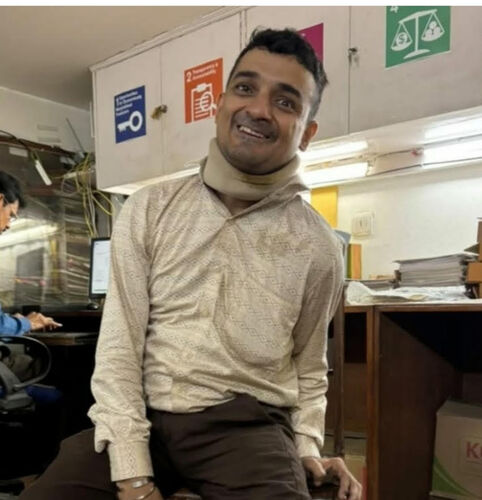
Rohit had an accident on his three-wheeler coming to work a couple of weeks ago and is currently in hospital with a drain in his lungs and a number of broken ribs to mend. I know he would love to receive a word of encouragement from you here
April 1st 2025
